The Machinery Still Stands
This is the first part in a series about Watkins Woolen Mill.
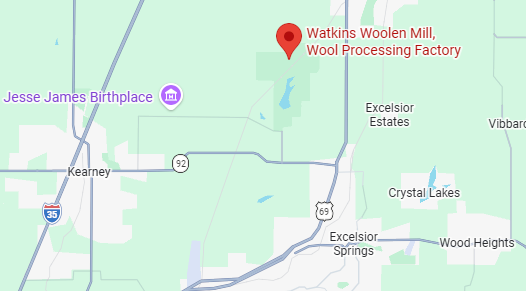
It was on a chilly Friday in mid-February that I found myself wandering alone down the gravel paths of Watkins Woolen Mill State Historic Site north of the visitor center. No power lines were in sight as sheep grazed in a field fenced in by split logs. Surrounded by the serene pastoral setting, I felt like I had been transported to an earlier century. In these beautiful surroundings, I couldn’t help but think about what different seasons would bring: the verdant greens of spring or the rustic browns of autumn. Or perhaps snow-covered hills in December with simple but ornamental Christmas decor.
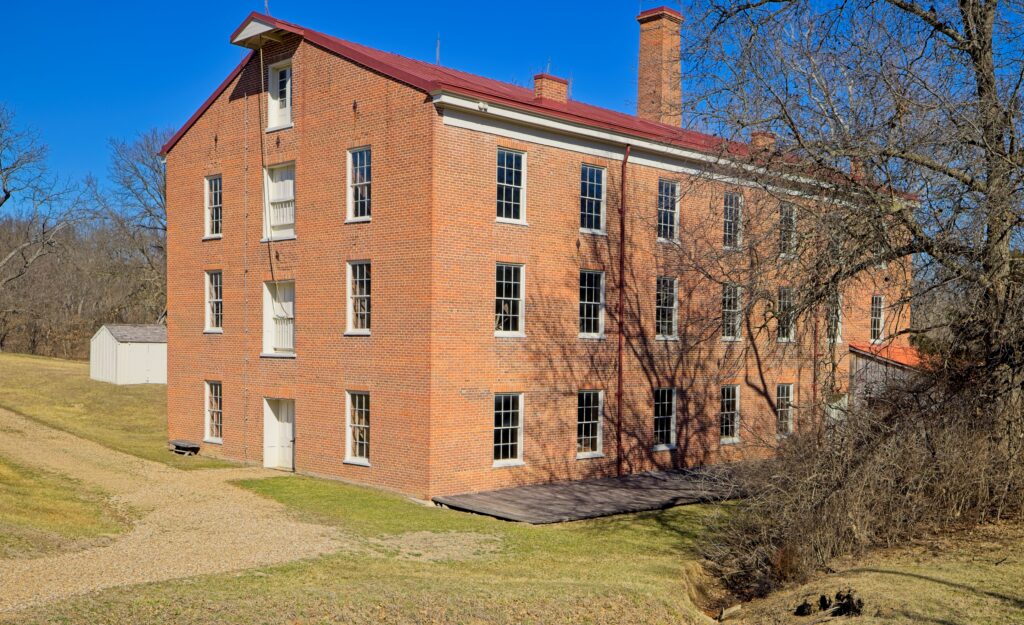
I arrived at the mill and was surprised that I was the only one there. Shortly after, the tour guide, Rebekah, arrived and confirmed that indeed, I was the only person to have purchased a ticket for this time slot. The thought was thrilling: it was effectively going to be a “private tour!”
A few moments later when we entered the mill, I was immediately impressed with the calmness that permeated the building. The stillness was accentuated by the soft, glowing light filtering through the nineteenth-century glass of the windows that surrounded the building. This particular day was bright and sunny, and I wondered how that might change under cloudy or even heavily overcast skies.
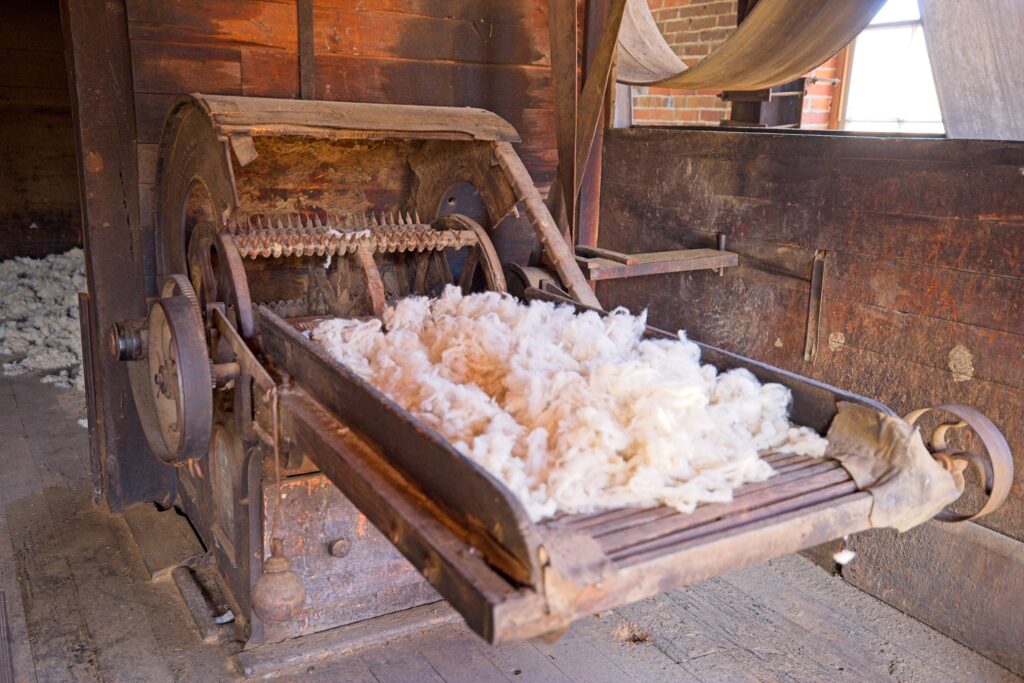
Rebekah said that it was fine to photograph everything there, but she asked me to avoid using flash. I chuckled and pointed out that I didn’t even have a flash with me, and she expressed some surprise that many visitors these days use flash-less cameras and wondered why that was. I responded that modern equipment performs much better than their predecessors in low light. It must have been much more difficult in the past to get photos in that soft, muted light, and that gives me a greater appreciation of what we have available today. I was also been struck by the contrast of that modern convenience while surrounded by equipment that was well over 150 years old.
The calmness that I was experiencing stands in stark contrast from what the operating factory must have sounded like. Reportedly, the noise could be heard from two miles away! Because it was difficult to envision the machinery operating at full capacity, I instead just focused on the quiet of the moment.
An 8,000-Pound Flywheel
Waltus Watkins moved from Kentucky to Missouri in the 1830s and eventually started construction on the 3½ story mill in the late 1850s. It went operational in 1860.
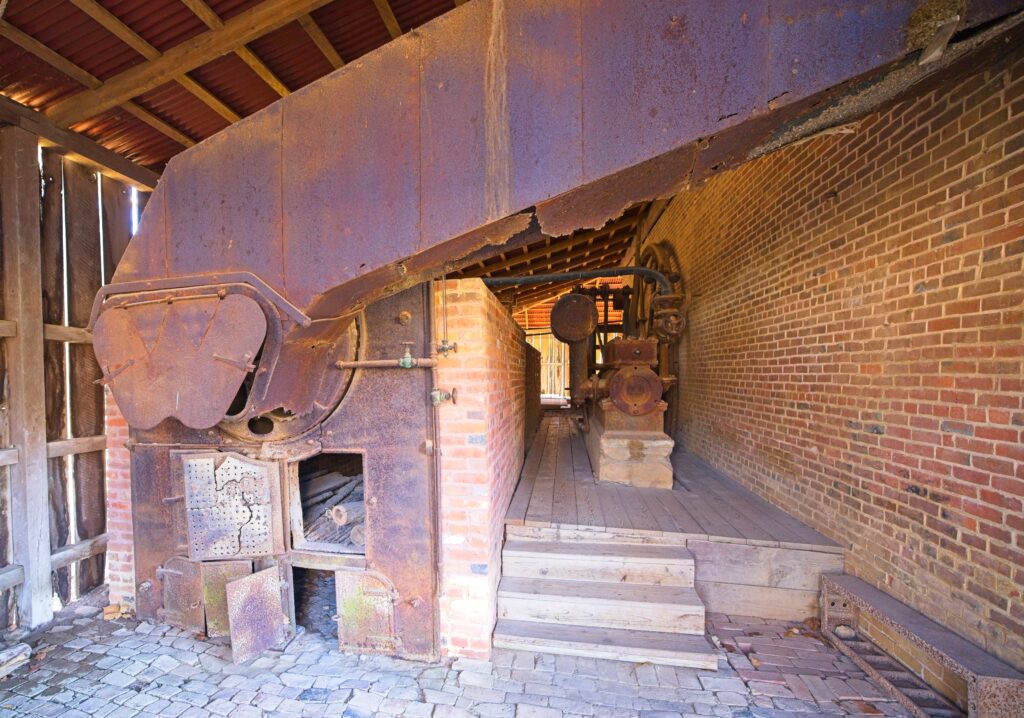
Before we entered the building, we walked around the exterior. I was most interested in the “heart” of the factory: the steam engine. Over two cords of wood per day were fed into a massive boiler, and the steam powered the 65-horsepower engine, which in turn drove a massive 8,000-pound flywheel. Once inside the building, I was impressed with the intricate maze of shafts, pulley, and belts that were spun by this power.
Once again, as I saw this labyrinth of “machinery to run the machinery,” in my mind’s eye I tried to imagine what the mill must have been like at peak power. I pictured it as “organized chaos.”
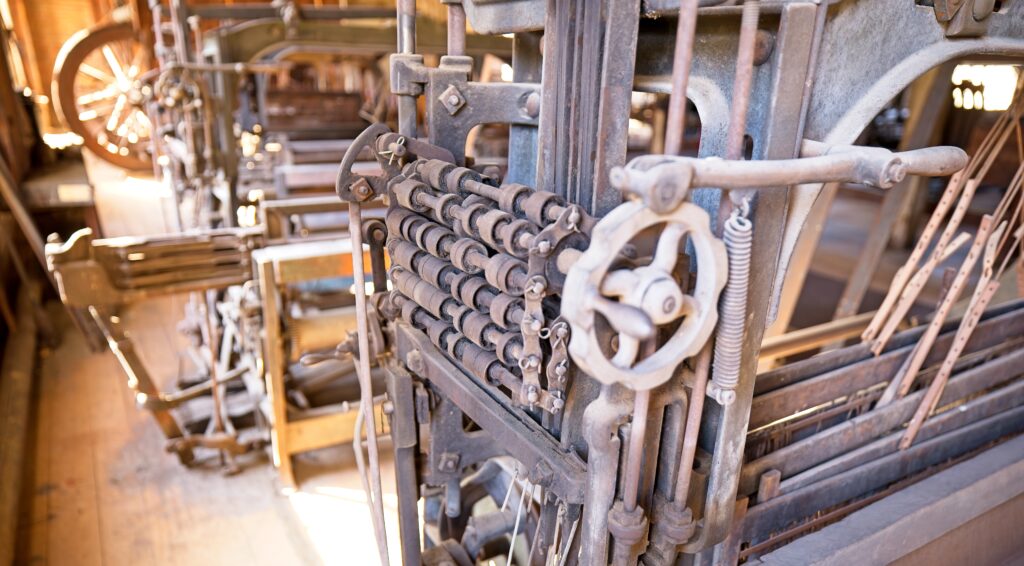
I learned a few things about the workers who ran the mill. Some of them were skilled machinists who operated the equipment while others were just very young boys, perhaps 9 or 10 years old, who stomped the freshly sheared wool into bags or who carried products around in the building. I heard stories of the seamstresses who paid great attention to detail as they worked the looms, and how mistakes became very costly for them.
The different stations were set up not based on an orderly movement of the wool through the factory but rather based on where it made sense to place the machines to connect to the pulley systems. Part of those young boys’ job was to pack the same materials back and forth accordingly.
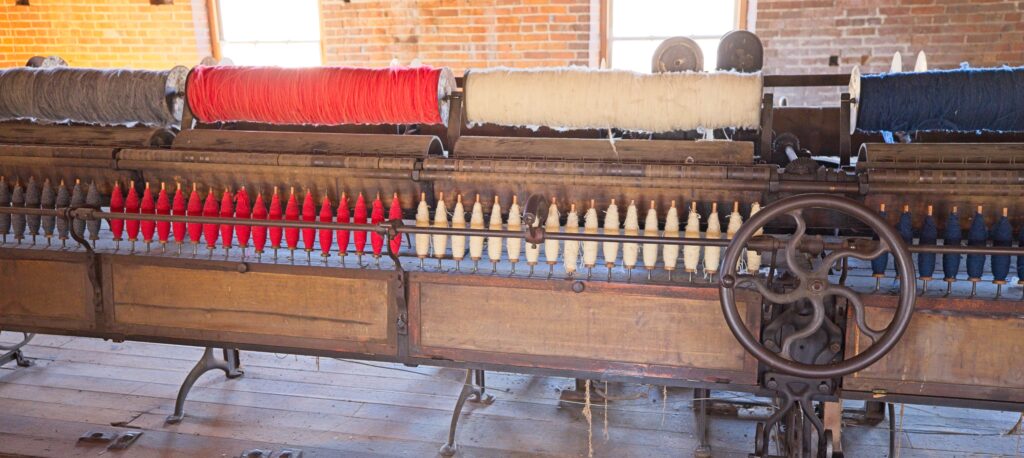
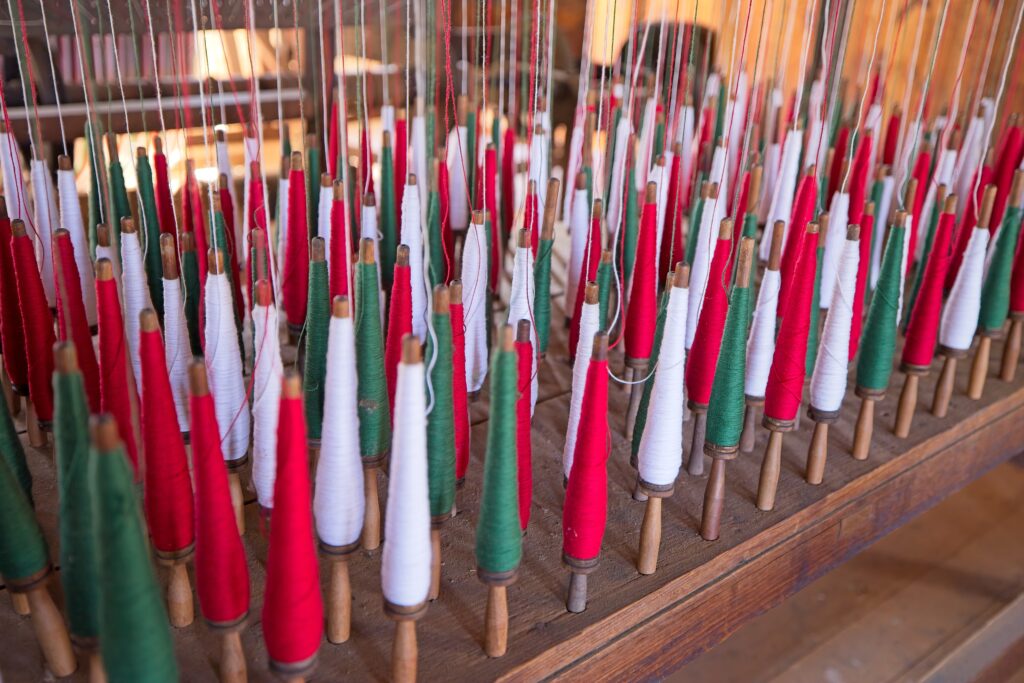
Wages began at 40 cents per day. Work in the factory was dirty and dangerous. Apparently, there are no records of anyone being injured, though it’s an open question of what unrecorded accidents may have occurred. No candles or other flames were allowed due to the risks, so only the daylight through the numerous windows gave the employees the light they needed. Those windows did not open, so it probably got very warm in summer and quite chilly in winter.
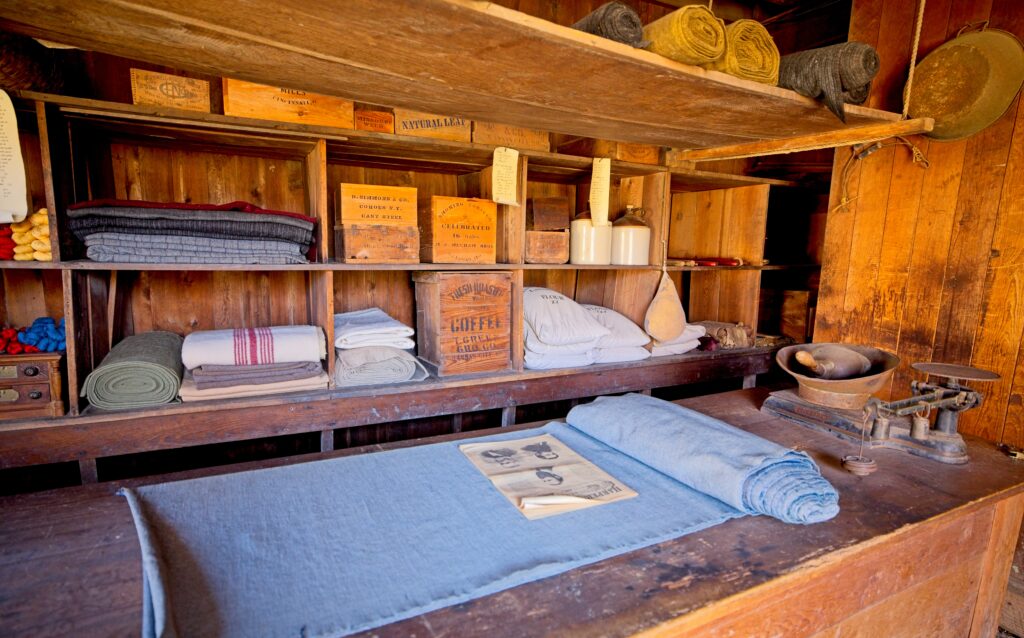
Customers could come directly into the mill to purchase products at a small storefront on the lower floor. The mill continued to operate until 1886 when one of the machines broke and a replacement was too expensive. It ran in a diminished capacity through 1898 in production of wool products, and then until 1905 as a gristmill. At that time, the steam engine broke down, and all operations ceased.
Through an interesting series of events, the machinery was never removed from the building, and the remarkably well-preserved mill became a state park site in 1964. No other mill from that era in the United States still has the original equipment in place. The building was primarily used for farm storage in the intervening years, and a later attempt to auction off the equipment ended when the winning bidder’s funding fell through. Today, we benefit from those circumstances by having such a beautiful piece of history.
Beyond the Mill
The Watkins family property eventually encompassed about 3,600 acres. The land was used for farming and livestock, and also provided the firewood to fuel the mill. Mr. Watkins called it Bethany Farm. He also built a magnificent home for the family not far from the factory. While not the primary objective of my visit, I was able to tour this as well, and it was an unexpected treat, but that’s a story for another day.
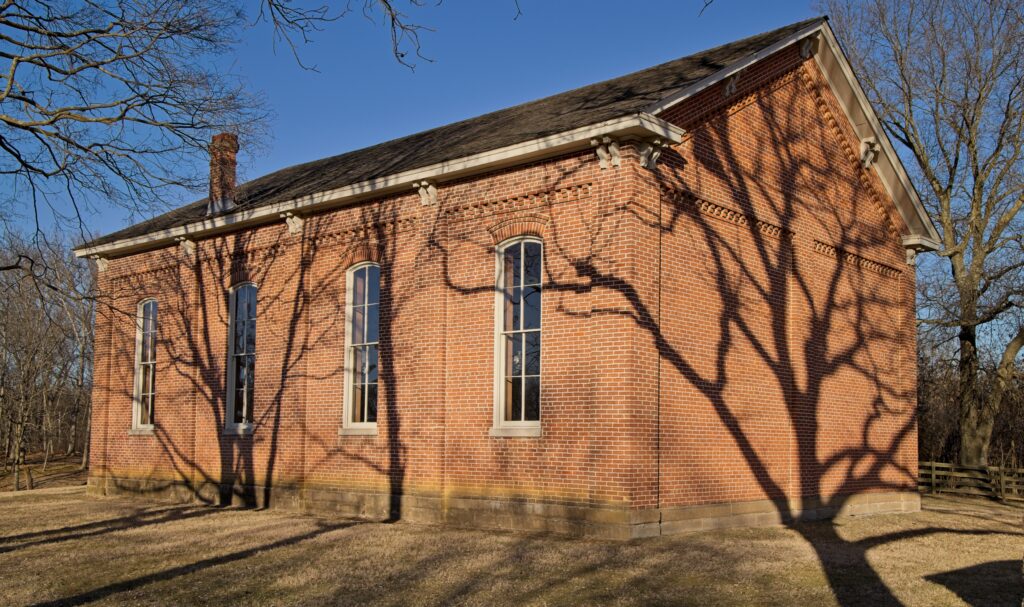
About a mile from the house and mill, and still on the Watkins property, were two other structures of interest, and I concluded my visit by walking around these buildings. One was a brick church building that replaced an earlier structure that had burned down. The Watkins family were major contributors to the construction costs. Today, it sits next to an unpaved road that an occasional car would ramble past, the only reminder of modernity.
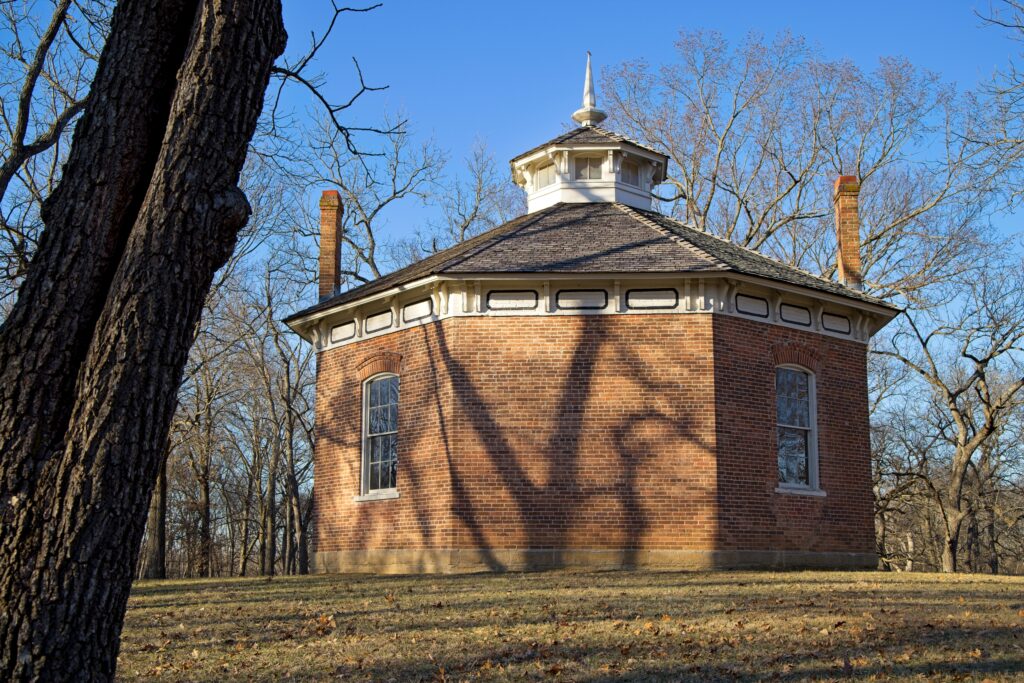
Sitting further back from that road is the Franklin Academy, which was housed in a unique octagonal brick building. It became one of the first public schools in the area. In later years, the school was relocated, and the building was turned into housing for mill workers.
During my visit, the late afternoon sun caused dramatic shadows from surrounding trees to fall on both of these buildings.
Future Plans
After I had toured the mill and the family house, but before visiting the church and the school, I returned to the visitor center and took some time at the various exhibits. The center’s closing time of 4:30 was approaching, so much of my exploration there will have to be deferred for future trips. One display particularly interested me: a working scale model of a loom that I was able to operate. This really helped me understand how those machines worked.
I also chatted with a couple of the rangers while there and learned about some future events happening at the park. My plan all along has been to revisit the location several times over the coming year to explore the setting in various seasons and, hopefully, differing weather conditions. I now plan to go to two or three of those extra events as well and hopefully enhance my appreciation of this site.
In reflection, my visit was too rushed. I want for those future trip to be more intentional and deliberate so that I can better examine, photograph, and appreciate the site. This is a location worth investing the time to explore more deeply.